IP protection rating
What do IP20, IP44, IP65, IP67, IP68 and IP69 mean?
The IP protection rating is one of the most important technical parameters when selecting LED lighting. It indicates the degree to which a product is protected against the ingress of solid objects, dust and water. This is particularly important when choosing LED strips, luminaires, power supplies and other components of a lighting installation.
In practice, the IP code helps answer a simple question: can a given product operate only in a dry room, or will it also be suitable for use in a bathroom, outdoors, in a humid environment or in places exposed to contact with water?
In this article, we explain what the most common IP protection ratings mean, how IP20 differs from IP44, IP65, IP67, IP68 and IP69, and how to choose the right LED solution for the operating conditions.
Data
13 May 2026
You will read in
10 minutes
Subject
IP protection rating
What does the IP rating mean?
The IP code comes from the English term Ingress Protection, meaning protection against the ingress of external factors into the device enclosure.
An IP rating usually consists of two digits:
the first digit indicates protection against solid objects and dust,
the second digit indicates protection against water.
Example: IP67. In this case:
6 means complete dust tightness,
7 means resistance to temporary immersion in water.
The higher the digits in an IP code, the higher the level of protection. However, this does not mean that every product with a high IP rating can be used in any conditions. Always take into account the specific operating environment, installation method, duration of water exposure, temperature, pressure and the manufacturer's recommendations.
Why is the IP rating important when choosing an LED strip?
LED strips can be installed in many different places: in furniture, ceilings, bathrooms, kitchens, façades, gardens, damp areas, and even near swimming pools. In each of these environments, the product is exposed to different conditions.
An LED strip for a dry indoor environment does not need a high level of water protection. However, a strip used in a location exposed to moisture, splashing or contact with water should have an appropriately selected IP rating.
An incorrect IP selection can lead to:
a shorter product lifespan,
damage to the LED strip,
installation performance issues,
the risk of corrosion of electrical components,
the need for earlier servicing or replacement of the lighting.
That is why, when selecting an LED strip, it is worth looking not only at power, light colour and luminous flux, but also at the conditions in which the product will operate.
How to read the IP rating?
The easiest way to remember it is this:
IP + first digit + second digit
The first digit indicates protection against solid objects and dust. The second digit indicates protection against water.
Example:
IP20 - protection against finger contact, no protection against water,
IP44 - protection against small solid objects and splashing water,
IP65 - complete dust-tightness and protection against water jets,
IP67 - complete dust-tightness and resistance to temporary immersion,
IP68 - complete dust-tightness and resistance to prolonged immersion in accordance with the manufacturer's declaration,
IP69 / IP69K - very high resistance to hot water at high pressure.
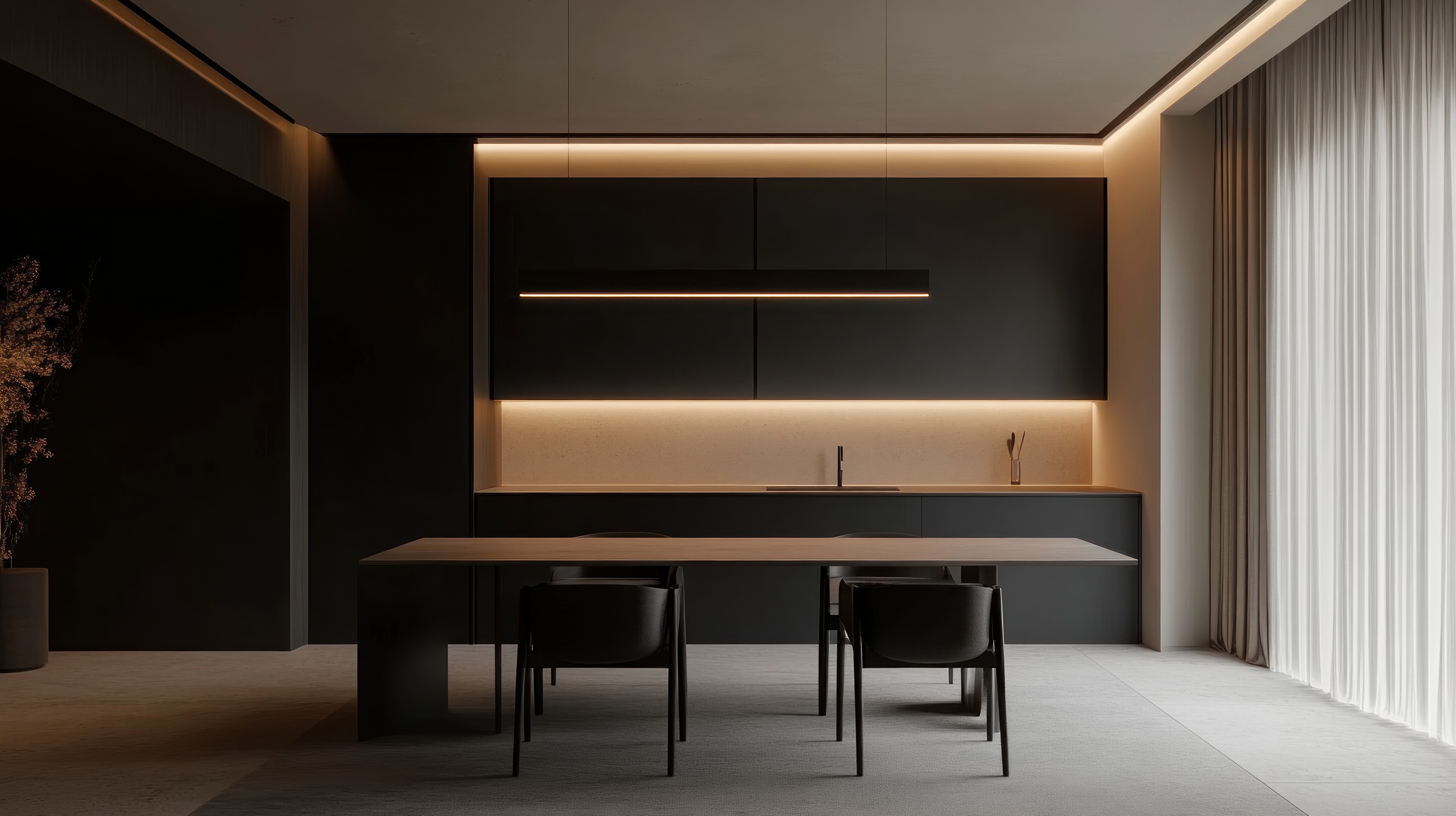
IP20 - for dry rooms
Protection rating IP20 means basic protection against access to hazardous parts with a finger and against solid objects larger than 12.5 mm in diameter.
However, it does not provide protection against water.
In practice, IP20 products are intended for dry locations where there is no moisture, splashing or high levels of dust.
Typical applications for IP20:
living rooms,
bedrooms,
offices,
dry furniture installations,
cabinets and technical enclosures,
interiors with no risk of contact with water.
An example would be a classic office luminaire, an LED strip installed in a dry furniture profile, or a power supply unit placed in an electrical cabinet.
IP20 should not be used in places where the product may come into contact with water, water vapour or heavy moisture.
IP44 - protection against water splashes
The IP44 protection rating means protection against solid objects larger than 1 mm and resistance to water splashes from any direction.
In practice, a device with an IP44 rating will withstand light rain, splashing or contact with splashing water. However, this does not mean it can be submerged or washed with a strong jet of water.
Typical IP44 applications:
bathrooms outside the direct splash zone,
garages,
utility rooms,
sheltered outdoor areas,
façade luminaires under cover,
sockets and accessories in areas exposed to splashing water.
A simple rule to remember: IP44 protects against splashes, but not against immersion or intensive water cleaning.
IP65 - dust-tightness and protection against water jets
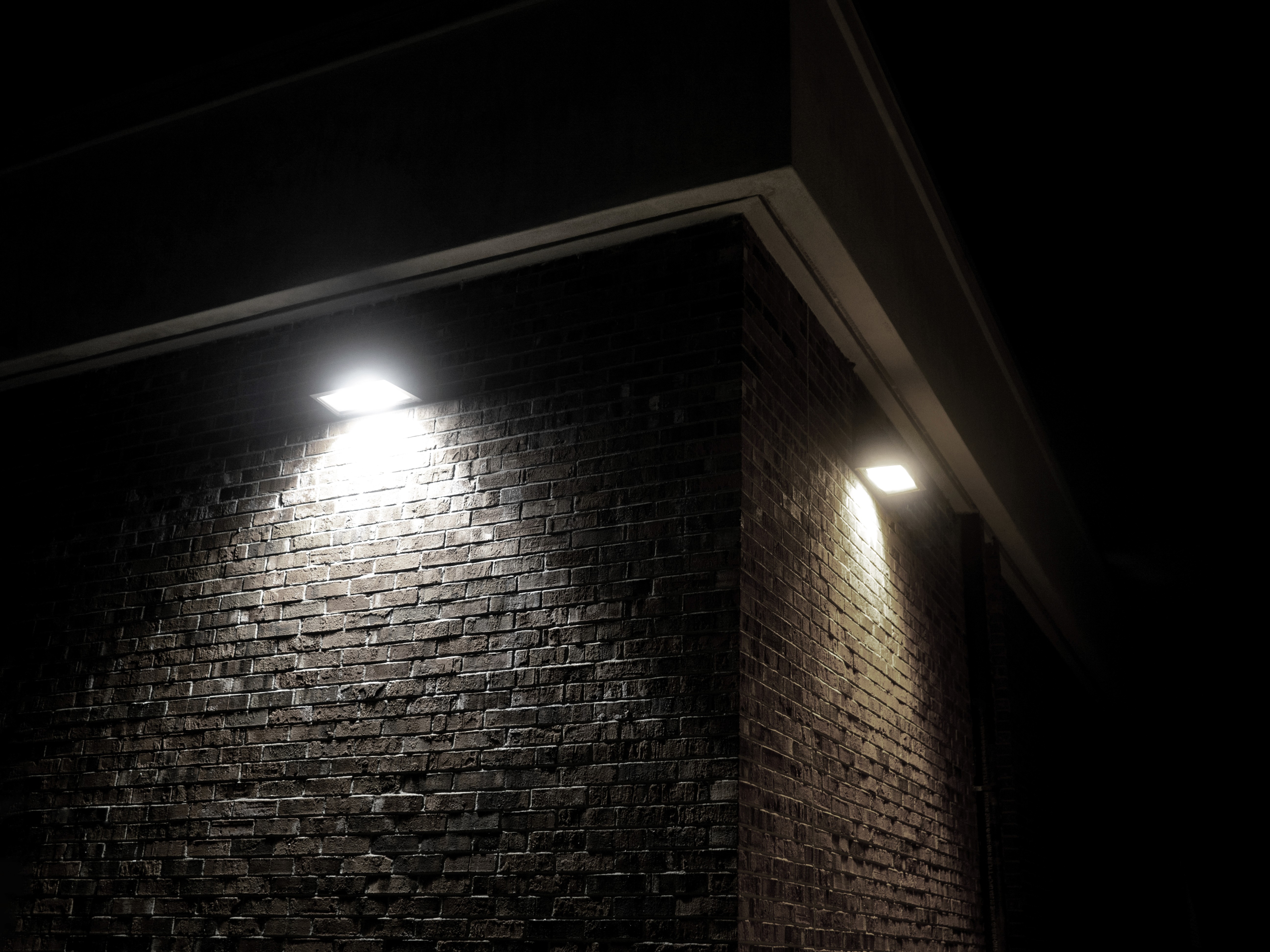
The IP65 ingress protection rating means complete dust tightness and protection against water jets.
It is a popular choice for products intended for outdoor conditions or environments where dust, moisture and contact with water may occur.
IP65 products can withstand, among other things:
heavy rain,
contact with a water jet,
dust,
industrial dust,
more demanding installation conditions than in dry indoor spaces.
Typical IP65 applications:
façade lighting,
LED strips for outdoor areas,
LED floodlights,
industrial enclosures,
CCTV cameras,
installations in areas exposed to dust and moisture.
However, it is important to remember that IP65 does not mean resistance to immersion. A product may be resistant to water jets, but it should not operate underwater.
IP67 - resistance to short-term immersion
The IP67 protection rating means complete dust-tightness and resistance to short-term immersion in water.
In practice, a product with IP67 may fall into water, operate during flooding, or work in a very wet environment. However, this does not mean it is designed for continuous underwater operation.
Typical IP67 applications:
industrial connectors,
hermetic junction boxes,
outdoor devices,
components exposed to temporary flooding,
installations in areas with very high humidity.
The key difference between IP65 and IP67 is that IP65 protects against water jets, whereas IP67 covers short-term immersion.
If a product is only going to be exposed to rain or external water, IP65 may be sufficient. If there is a risk of temporary immersion, it is worth considering IP67.
IP68 - resistance to prolonged immersion
The IP68 ingress protection rating indicates complete dust tightness and resistance to prolonged immersion in water.
This is a very important protection class for products that are intended to operate in areas constantly exposed to contact with water or in wet environments.
However, it should be remembered that IP68 does not always mean exactly the same operating conditions for every product. The standard does not specify one universal immersion depth and time for all devices. The detailed conditions, such as depth, duration and the nature of operation under water, are defined by the manufacturer.
For example, IP68 may indicate resistance to:
immersion for a specified period,
operation at a specified depth,
continuous contact with water in accordance with the manufacturer’s declaration,
a special environment, if the product has been designed for it.
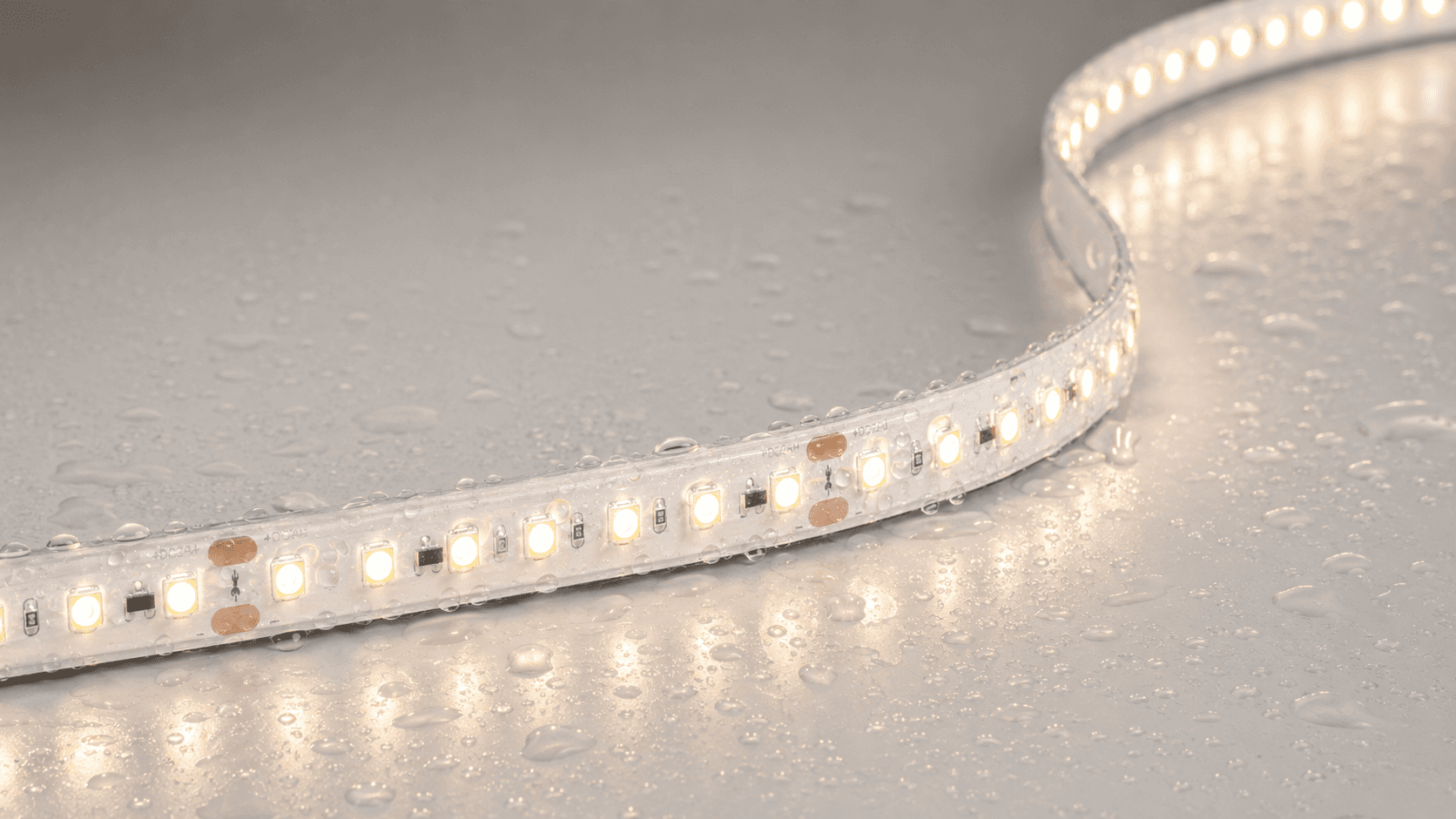
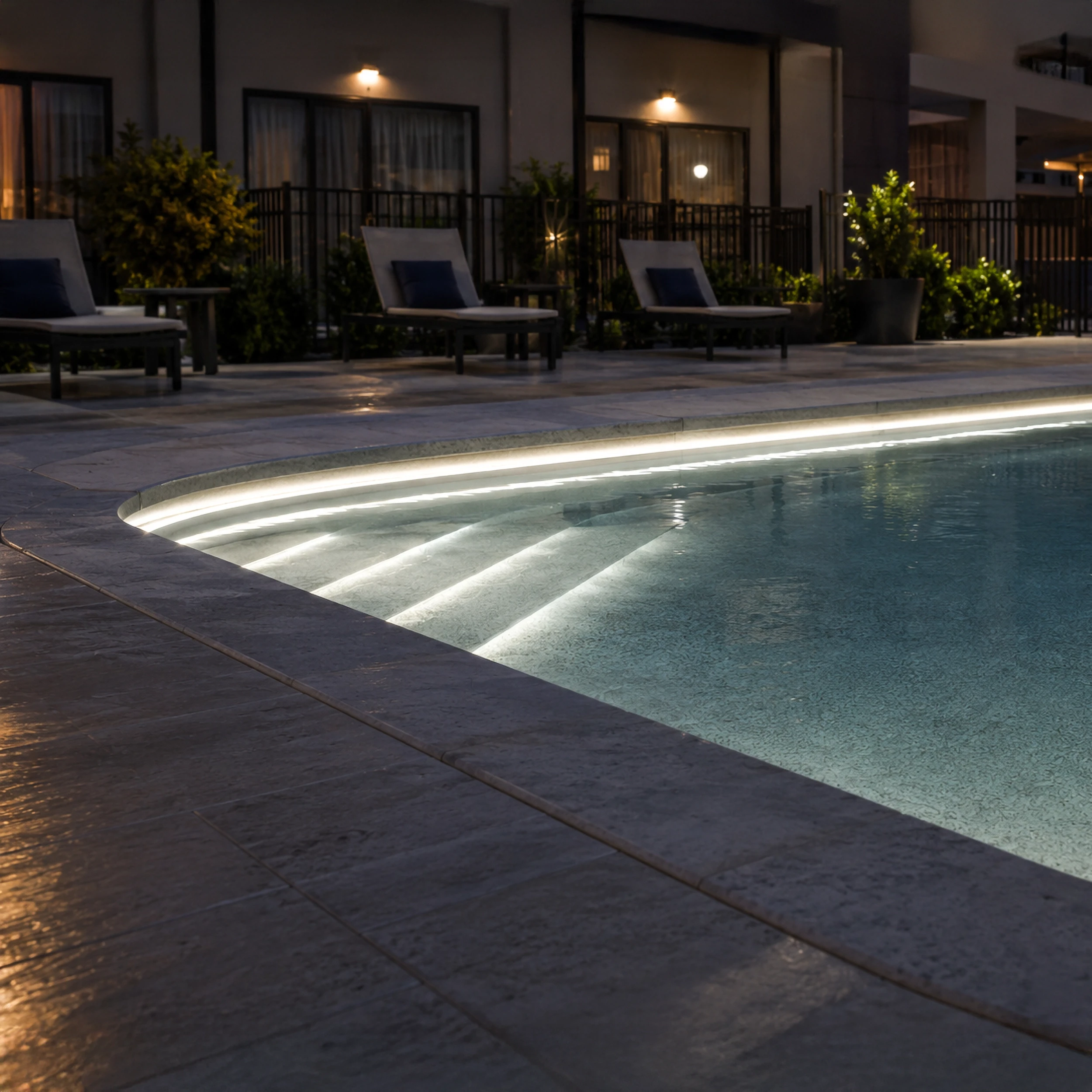
In the Bergmen range, an example of an IP68-rated LED strip is the Pool LED strip, designed for operation in pool environments. The manufacturer declares that the strip’s protective coating is resistant to the chemical compounds typically found in pool water.
IP69 and IP69K - the highest resistance to pressurised water
The ingress protection rating IP69 or IP69K means very high protection against water at high pressure, often also at elevated temperatures.
This type of protection is used primarily in industrial environments, where equipment may be regularly washed with pressurised water or operate in very demanding conditions.
Typical applications for IP69 / IP69K:
food industry,
production facilities,
pressure-washed areas,
equipment exposed to hot water,
vehicles and specialised installations,
industrial enclosures.
In practice, IP69 / IP69K is not a standard choice for most LED lighting installations in buildings. It is a solution designed for particularly demanding environments, where the luminaire must withstand intensive washing, high water pressure, humidity and harsh operating conditions.
IP65, IP67 or IP68 – which should you choose for an LED strip?
The choice of the appropriate IP rating depends primarily on the installation location and the type of contact with water.
For dry interiors, furniture installations and internal profiles, a product with a lower IP rating is usually sufficient, for example IP20.
For areas exposed to moisture, rain or dust, IP65 is worth considering.
If the product may be briefly flooded or submerged, IP67 will be the better choice.
If the LED strip is to operate in an environment with permanent or long-term contact with water, a product with an IP68 rating should be selected, in accordance with the conditions specified by the manufacturer.
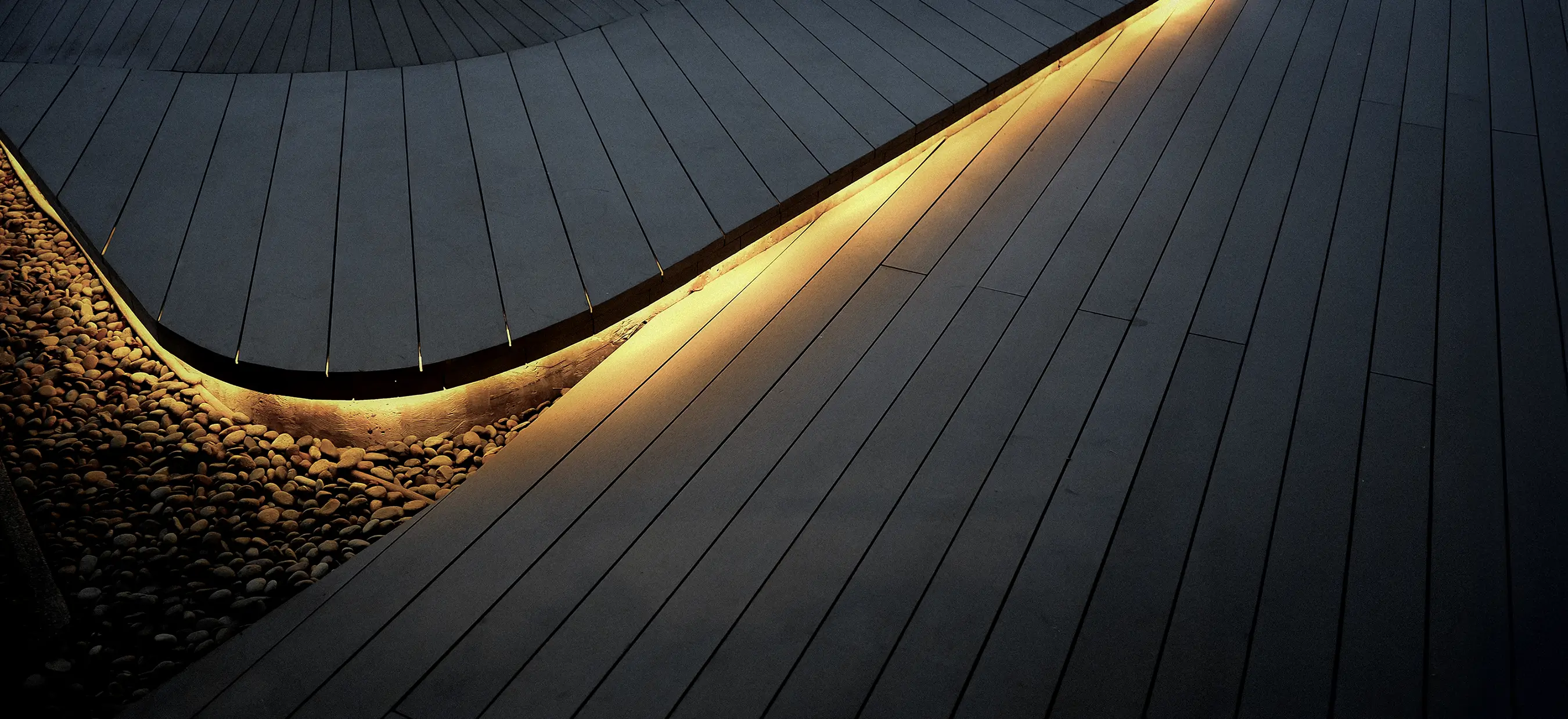
For pool applications, it is important not only to have IP68 itself, but also for the cover material to be resistant to the chemicals present in pool water. That is why, for such projects, it is worth choosing products designed specifically for this type of environment.
The most common mistakes when selecting the IP rating
Choosing the right IP rating may seem straightforward, but in practice many problems result from misinterpreting the markings.
The most common mistakes are:
using IP20 products in areas exposed to moisture,
treating IP44 as protection against a strong water jet,
assuming that IP65 allows the product to be submerged,
considering IP67 a rating for continuous underwater operation,
choosing IP68 without checking the conditions declared by the manufacturer,
overlooking the material's resistance to chemicals, temperature or UV radiation,
failing to protect connections, end caps and cut points.
In the case of LED strips in particular, it is worth remembering that the product enclosure alone is not everything. Equally important are the connections, cables, power supply, mounting method and protection of the ends.
Does a high IP rating always mean a better choice?
Not always.
A higher protection rating means greater resistance to external factors, but not every project requires maximum sealing. In a dry indoor environment, an IP20 product may be fully sufficient. Conversely, in a humid, outdoor or wet environment, a lower IP rating may prove insufficient.
The best choice is not always the highest IP, but an IP rating matched to the product's actual operating conditions.
It is worth asking yourself a few questions:
Will the product be used indoors or outdoors?
Will it be exposed to dust?
Will it come into contact with water?
Will that be splashes, a water jet or immersion?
Will the water contain chemicals?
Will the installation require cleaning or servicing?
Do the power supply and connections have the appropriate level of protection?
Only after such an analysis can you properly select the appropriate IP protection rating.
Frequently asked questions about the IP rating
What does IP20 mean?
IP20 means protection against finger contact and no protection against water. Products with this protection rating are intended for dry rooms.
Is IP44 sufficient for a bathroom?
IP44 may be sufficient in areas exposed to splashing, but not for zones with direct contact with water. In a bathroom, always take into account the specific mounting zone and the manufacturer’s recommendations.
Is IP65 waterproof?
IP65 means protection against water jets, but it does not mean resistance to immersion. An IP65 product can withstand rain or contact with a water jet, but it should not operate underwater.
What is the difference between IP67 and IP68?
IP67 means resistance to temporary immersion. IP68 means resistance to prolonged immersion in accordance with the conditions specified by the manufacturer.
Is IP68 always suitable for a swimming pool?
Not always. IP68 indicates resistance to prolonged immersion, but in pool applications resistance to the chemical agents present in the water is also important. For such applications, it is worth choosing products designed specifically for the pool environment, such as the LED Pool strip.
Does the power supply also need to have the correct IP rating?
Yes. The protection rating of the entire installation depends not only on the LED strip, but also on the power supply, cables, connections and the protection of cutting points. Even the best strip will not operate correctly if the other components of the installation are not matched to the environmental conditions.
Summary
The IP rating is one of the key parameters when selecting LED lighting. It indicates the extent to which a product is protected against dust, solid objects and water.
For dry areas, IP20 may be sufficient. For locations exposed to splashes, IP44 is worth considering. In outdoor and dusty conditions, IP65 is a good choice. If the product may be temporarily submerged, IP67 will be the appropriate option. For prolonged contact with water, choose an IP68 solution in line with the conditions declared by the manufacturer.
For LED strips, the most important thing is to match the protection rating to the actual operating environment. A strip installed in a dry furniture profile has different requirements from a product intended for use in a pool environment.
If the project requires an LED strip with high water resistance, it is worth checking the LED Strip Pool IP68, designed for operation in demanding pool environment conditions.
Author

Tomasz Jałocha
Brand Manager
Responsible for the development and consistency of the brand image. On a daily basis, ensures that Bergmen's values are visible in every aspect of communication - from marketing strategy, through expert materials, to customer experiences.
Table of contents: